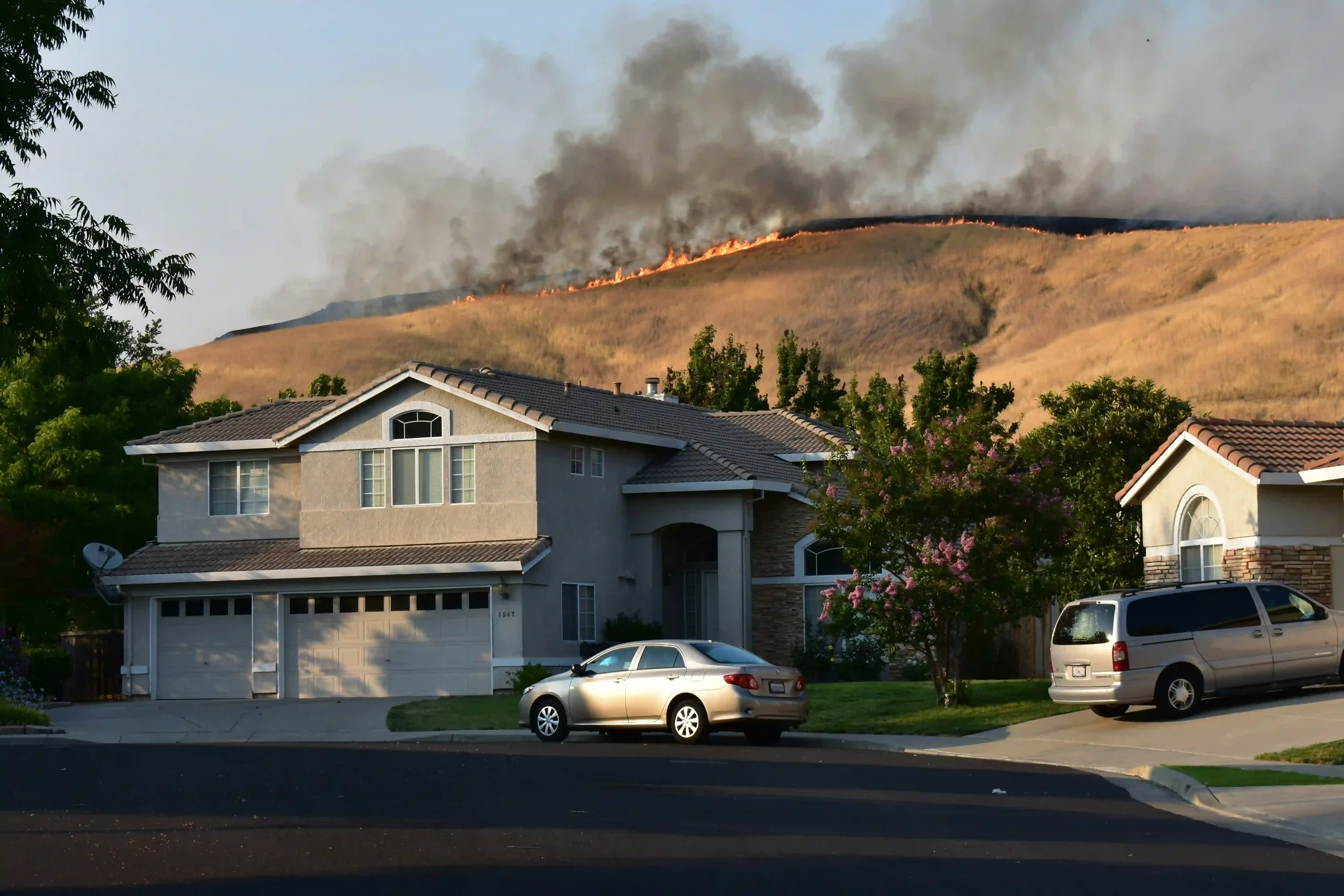
California wildfire season does not wait for a convenient moment. For homeowners in Santa Cruz County, Monterey County, and the broader Central Coast, the dry summer months bring a familiar and serious concern. The question worth asking before fire season peaks is not whether wildfires happen here. It is whether your home insurance is ready if one does.
Why Central Coast Homeowners Need to Think About Wildfire Coverage
The CZU Lightning Complex fire in August 2020 burned more than 86,000 acres across Santa Cruz and San Mateo counties. It destroyed hundreds of homes and forced mass evacuations across communities that had not seen that level of fire activity in generations. For many local homeowners, it was a wake-up call about how quickly conditions can change.
The hills and open spaces throughout the Santa Cruz Mountains, the Pajaro Valley, and the inland areas of Monterey County carry real wildfire risk every summer. Drought conditions, dry grasses, and seasonal winds create an environment where fires can spread faster than expected. If your home sits near open land, a hillside, or a rural road, wildfire exposure is worth taking seriously.
What Standard Home Insurance Covers and Where It Falls Short
Most standard homeowners’ insurance policies do include fire coverage. If a wildfire damages or destroys your home, a standard policy will generally help cover the cost of rebuilding the structure and replacing your personal belongings, up to your policy limits.
That last phrase matters a great deal; “up to your policy limits.”
One of the most common problems that emerges after a wildfire is underinsurance. A homeowner discovers that their dwelling coverage limit, the amount the policy will pay to rebuild the home, is significantly lower than what it would actually cost to rebuild at current construction prices. Rebuilding costs in California have risen sharply in recent years, and many older policies have not kept pace. In a major disaster like a wildfire, reconstruction costs can also spike due to “surge pricing” when demand for contractors and materials outpaces supply.
A few other areas where coverage gaps can appear:
Additional Living Expenses: If a wildfire forces you out of your home while repairs are underway, your policy should include coverage for temporary housing and living costs. The limits on this coverage vary, and some homeowners find they are not sufficient for an extended displacement.
Smoke and Ash Damage: Homes that are not directly in a fire's path can still suffer significant smoke and ash damage. Most standard policies cover this, but the claim process can be more involved than homeowners expect.
Landscaping and Outbuildings: Fences, detached garages, sheds, and landscaping may have limited coverage or separate sublimits depending on your policy structure. It is worth knowing what those limits are before you need them.
California-Specific Considerations for Wildfire Coverage
California has taken steps in recent years to protect homeowners in high-risk fire areas. State law currently restricts insurers from canceling or non-renewing policies in certain situations, and the FAIR Plan exists as a last-resort option for homeowners who cannot obtain coverage through the standard market.
In recent years, the California insurance market has become more challenging. Several major carriers have reduced their appetite for writing new homeowners’ policies in high-risk zip codes, including parts of Santa Cruz County and Monterey County.
Steps You Can Take Right Now
You do not need to wait for a renewal date to review your wildfire preparedness from an insurance standpoint. A few things worth doing before fire season peaks:
Review your dwelling coverage limit. Compare it against current construction costs in your area. If it has not been updated in several years, it may be worth requesting a coverage review.
Check your additional living expenses limit. Understand how long your policy would support temporary housing and whether that aligns with realistic displacement scenarios.
Ask about extended replacement cost coverage. Some policies offer this as an endorsement, which provides additional coverage above your dwelling limit if rebuilding costs exceed what was anticipated.
Document your belongings. A home inventory, even a simple video walkthrough saved to the cloud, can make the claims process significantly smoother if you ever need it.
Talk to your agent. If you have not reviewed your homeowner’s policy in more than two years, a conversation with a licensed agent is worth the time. If you are reviewing your home insurance, it is also worth exploring whether bundling your home and auto coverage could lower your overall premiums. See our guide to home and auto bundling in California. Our annual personal insurance checklist for Santa Cruz County residents is also a great place to start.
How an Independent Agent Can Help
Navigating wildfire coverage in California has become more complicated as the market has shifted. Carrier availability, coverage options, and pricing vary more than they used to, especially for homes in areas with elevated fire risk.
There is some genuinely encouraging news on the horizon. In the coming months, some insurance carriers are cautiously re-entering the California market under the California Insurance Sustainability Strategy, developed in partnership with the Department of Insurance. We are hopeful that new avenues to better coverage and more competitive premiums are ahead for Central Coast homeowners.
At KBK Insurance Agency we are not tied to a single carrier. We have access to multiple preferred and standard A-rated markets, which means we can look at your current policy, compare it against what is available, and help you find the coverage that actually fits your situation. We have been helping homeowners in Watsonville and throughout the Pajaro Valley make these decisions for over a century, and that experience matters when the market gets complicated.
If you have questions about your current homeowners insurance coverage or want a second opinion heading into fire season, we are happy to take a look.
Contact us at www.kbkinsurance.com/contact or call us at (831)724-1085.
Coverage availability, terms, and conditions vary by policy and carrier. Speak with a licensed insurance professional to understand your specific situation.